
By Jim Kinney | jkinney@repub.com
WESTFIELD — The first F-35 stealth fighter landed at Barnes Air National Guard Base last week, but it’ll take about three years and $200 million in construction before the Air National Guard 104th Fighter Wing is fully capable of doing everything an F-35 unit needs to do.
That construction includes a complex $30 million flight simulator Col. Michael P. “Shot” Glass told U.S. Rep Richard E. Neal Wednesday is critical to getting pilots ready to fly the $100 million aircraft.
“It’s a big project,” Glass said.
But he added he’d sleep better at night knowing the 33 pilots have access to the simulator. Glass and his other pilots travel all over the country, but most commonly Burlington, Vermont, to use simulators. There they can practice maneuvers that are difficult or impossible to do in a single-seat aircraft including drilling on how to glide the plane to earth if the engine stops.
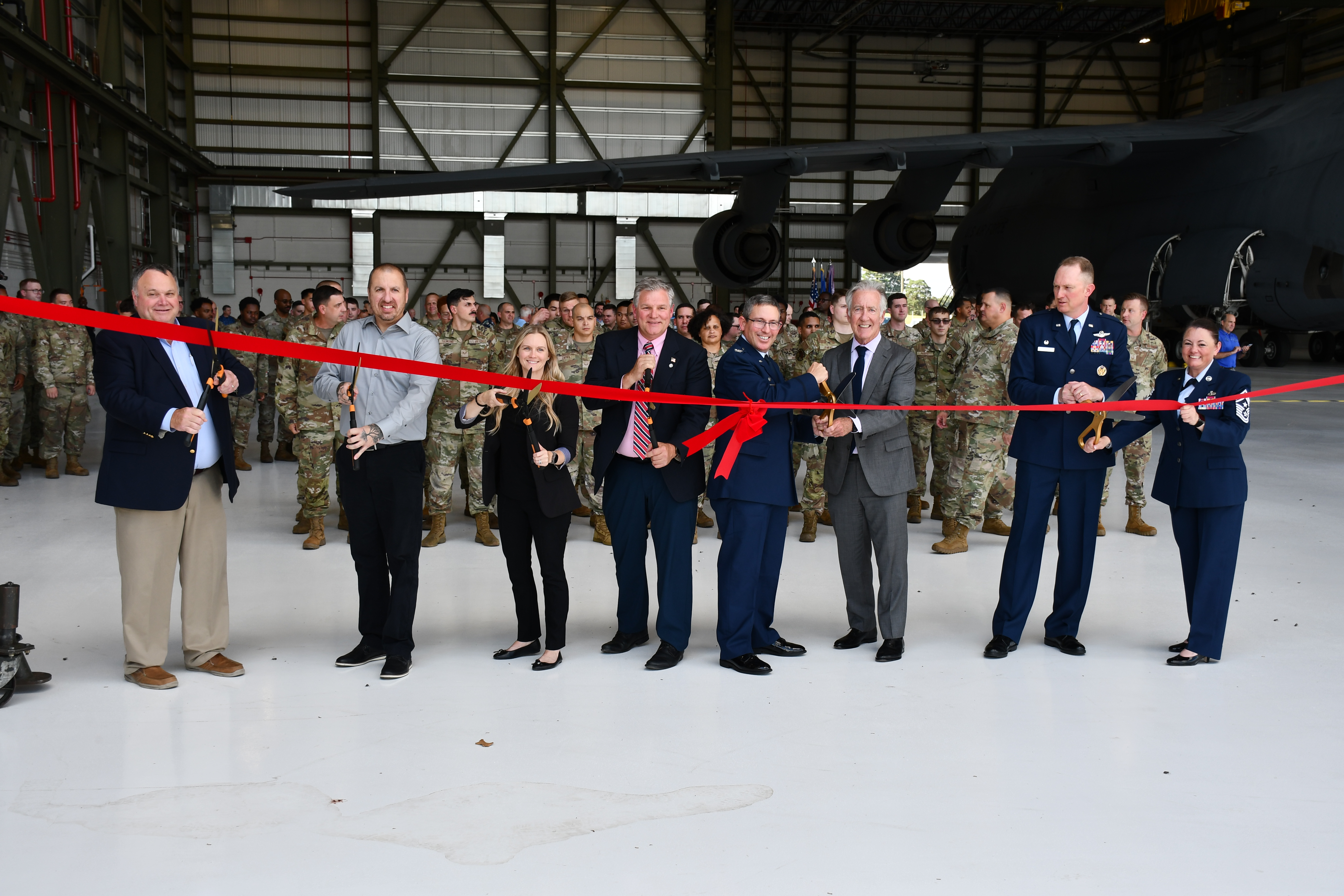
Neal, D-Springfield, visited Barnes Wednesday afternoon, meeting with Glass and his staff and getting a chance to head out on the tarmac to see an F-35.
“Pleased,” Neal said. “It’s been a long initiative.”
Ten years of bipartisan lobbying by Neal, Gov. Maura Healey and former Gov. Charlie Baker; and U.S. Sen. Elizabeth Warren, D-Mass., and local officials brought the F-35s to Westfield.
The Pentagon announced a decision to base the planes here in April 2023.
The new planes replace the outmoded F-15s the 104th used to fly here.
Neal said the arrival of the F-35s means Barnes will be here, protected from future belt tightening and base closures, for years.
That means security for 2,100 jobs at Westfield-Barnes Regional Airport, some of which are the 1,000 or so Guard members but the rest other businesses, including two flight schools and a Gulfstream maintenance facility across the runway from the air base.
“The competition was spirited,” Neal said.
He credited the Guard, Healey and Westfield Mayor Michael McCabe.
“You’ve got to stick with it,” he said.
Glass walked Neal out to the aircraft where he met with maintainers and peered into the cockpit, a rare privilege given the security surrounding the aircraft.
“That’s a big plane for only one guy to sit in it,” Neal joked. “And that seat is pretty narrow.”
All F-35 variants are only single-seat planes.
Each is capable of Mach 1.6, or 1,200 mph, according to manufacturer Lockheed Martin. Standard armament includes a 25 mm cannon, two air-to-air missiles and a pair of 2,000-pound guided bombs, according to the defense manufacturer.
Maintainers are training on the four F-35s now, Glass said. He expects pilots to start flying F-35s from Barnes at the end of this month.
These planes are on loan from other units, Glass said. The F-35s headed to Barnes are held up by manufacturing delays, but Glass has seen them at the factory in Fort Worth, Texas.
The 104th will get about 20 F-35s and they’ll start arriving this fall.
Glass explained in brief how the state-of-the art cameras and displays help the pilot. He described the F-35 as three flying supercomputers.
“This airplane is amazing,” Glass said.
Neal asked if the simulator could be funded as an earmark or congressionally directed spending.
Asked how receptive Washington is to defense spending in the Northeast, in a Democratic state:
“I’m an institutionalist,” Neal said. “The regular order, friends, allies.”