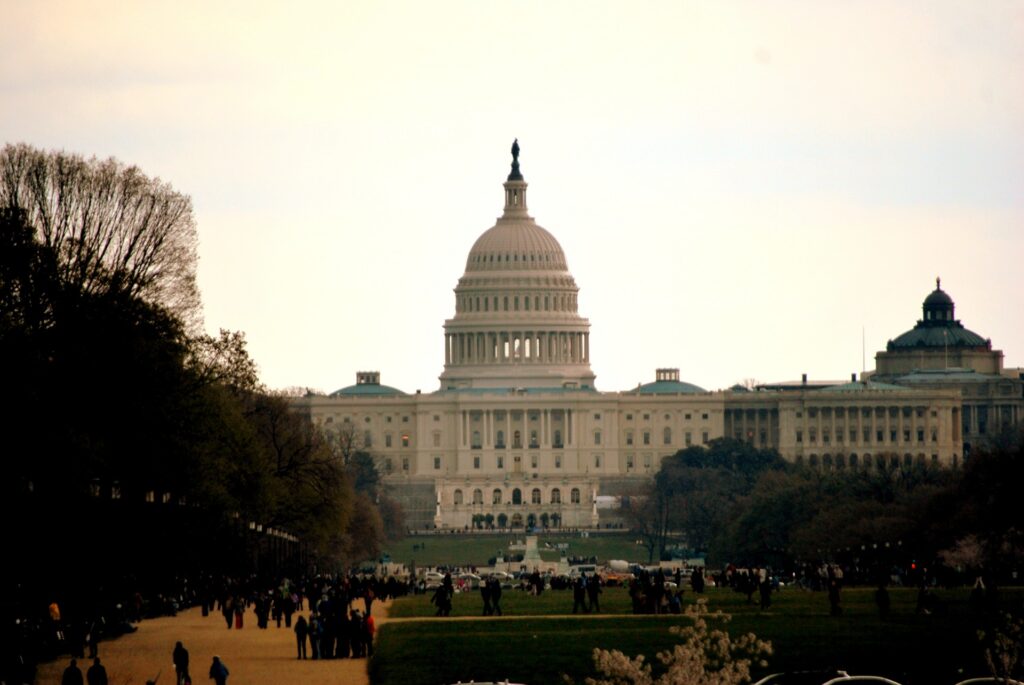

Washington, DC
PITTSFIELD >> Helping Sabic Innovative Plastics employees “get back to the workforce quickly should be our goal,” said U.S. Rep. Richard E. Neal during a visit to the city, where he said the firm’s decision to leave in 2016 “certainly surprised” him and his staff.
Roughly 300 skilled to semi-skilled employees are poised to lose their jobs as Sabic prepares to make Houston, Texas, its primary U.S. hub.
The Springfield Democrat said he’s spoken to Gov. Charlie Baker about ways to “ameliorate and help the folks who are going to find themselves out of work.”
“I’m sure there is going to be some [federal] assistance available,” Neal said, suggesting he might help track down additional funding.
“One of the problems that continues to plague the American economy is the loss of precisely these kinds of jobs,” he said. ” They’re important, and replacing them is going to be very, very difficult.”
But Neal said he expects to keep himself active and informed on the issue. Meanwhile, the state, he said, should direct available federal money toward “retraining opportunities and transitional assistance.”
“What you’ll hopefully find is that the next manufacturer will come along,” Neal said. “Not to miss the point that the New England Council coupled with Beloit has estimated right now that there are 16,000 precision manufacturing jobs available in New England. Making those connections between individuals and employers will be very important.”
Sabic announced earlier this month that it intends to dissolve its global headquarters in Pittsfield.
Williams College economics professor Stephen Sheppard estimated that the total job loss to the region would be about 495 after factoring in the ripple effect on other industries. He also said that put the total hit to the Berkshire County economy at $166 million per year, a decline of roughly 3 percent.
During his visit, Neal planned to speak privately with Pittsfield Mayor Daniel L. Bianchi about Sabic’s closing as well as about local programming for local youths to prevent gang membership and gang-associated violence.
Neal said organizations like Pittsfield Community Connection and the Boys & Girls Club of the Berkshires can play key roles in the most important solution: prevention.
“Trying to head it off in the early stages to get those young people to embrace more productive opportunities rather than the cult of gang violence is a primary goal,” he said. “Finding them another outlet to prevent bad social behavior is important to all of us.”
He added, “Addressing this and coming to the assistance of our police forces and district attorneys is very important. But you want to address the problem before it ends up with the police and before it ends up in the district courts.”
Also during the visit, Neal joined city, Berkshire Regional Planning Commission and U.S. Environmental Protection Agency officials in welcoming grant funds totaling $850,000 to the Berkshires from the federal brownfields program.
The majority, $500,000, will be administered to various areas of need by BRPC, while the remaining $350,000 is slated for site assessment of the former Stetson Dry Cleaners behind City Hall, which was demolished this year. The funding was announced in June and has just been released to the city.
A chemical plume left behind by the materials formerly used in the dry cleaning process remains, most notably consisting of tetrachloroethylene (PCE), and the contamination extends from the immediate area in a radius of unknown size. Remediation will begin once the size is known, after which the city hopes to take possession of the property through tax title from its absentee owner and possibly turn it into a parking lot.
“Wrestling with 20th century contamination in the 21st century is a challenge for communities all across the Northeast,” Bianchi said. “The EPA has been sensitive and timely in their help.”
EPA Deputy Director Nancy Barmakian touted the progress being made in the brownfields program in Massachusetts.
“Out of $54 million awarded nationally in assessment and cleanup grants, almost $3.2 million are going to communities in Massachusetts, $1.3 million to four recipients in Western Massachusetts,” she said. “The program helps energize the state’s economy. [Grant recipients] have reported nearly 505,000 jobs leveraged and over $1.6 billion leveraged as a result of the federal investment.”
Contact Phil Demers at 413-496-6214.
To read the original article, please click here.