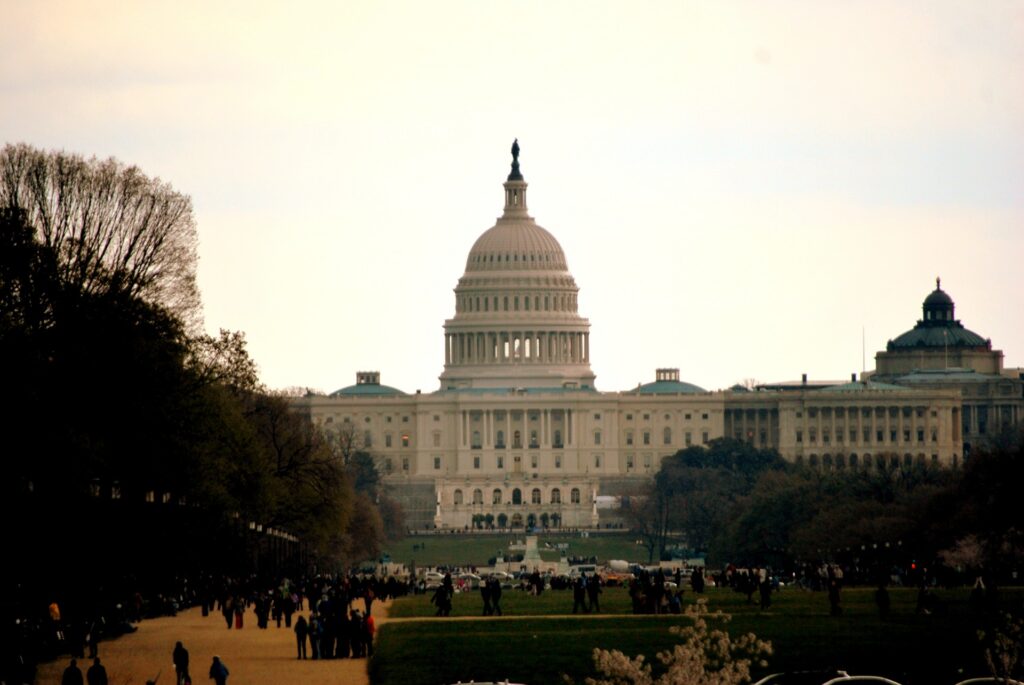

Washington, DC
BOSTON – The day U.S. Rep. Paul Ryan, R-Wisconsin, was going to be elected as House speaker, he made hasty arrangements for a photograph to be taken of the House Ways and Means Committee, of which Ryan was the chairman and U.S. Rep. Richard Neal, D-Massachusetts, is a member.
Neal, of Springfield, joked with Ryan, “The way things are going on your side, you may be back here pretty soon.”
Neal, speaking at a New England Council breakfast at the Seaport Hotel in Boston on Friday, bemoaned the loss of traditional politicking in favor of a Congress that is more divided by partisan ideology.
The challenge Ryan will face, Neal said, “is not about the leadership, it’s frequently about the followership.”
Neal, who was first elected to Congress in 1988 and is the dean of the Massachusetts delegation, said in the past, there was more willingness by politicians to be satisfied with a compromise deal than there is today. He recalled bipartisan celebrations in past years after the passage of a major bill.
“That now is nonexistent,” Neal said. “There’s no crossover because of the role that ideology now plays in the forefront of everything. Ideology trumps all.”
Neal said Ryan will face a test as to whether he continues in the independent path of former House speaker John Boehner “or whether he is going to be in the clutches of the freedom caucus,” a more conservative faction of the House Republican Party. Neal noted that Ryan recently voted not to reauthorize the Export-Import Bank, lining up with the stance of the more conservative Republicans. But the next day, he voted for a budget bill that was negotiated by Republican and Democratic leaders of the Legislature and President Barack Obama.
“I think he was trying to have it both ways,” Neal said.
“We can’t depend on Donald Trump being the nominee of the Republican Party to get us on a path to a majority.”
In an interview and during his speech, Neal said the loss of centrist northeast Republicans and southern Democrats has led to a polarized Congress, with less room for agreement.
Neal faulted Democrats for not trying to hold on to more conservative southern Democrats, who might vote against the party at times, but who can keep a Democrat in the speaker’s chair. “Today, in the fanfare to make it a more pure party, we’ve done it – with 188 seats,” Neal said. “They have 247, more than any time since Calvin Coolidge was president.”
Neal said Democrats need to pay more attention to how to win back a majority. “We can’t depend on Donald Trump being the nominee of the Republican Party to get us on a path to a majority,” Neal said.
Throughout his talk, Neal paid homage to traditional politicking. Neal recalled a conversation he had with U.S. Rep. Dave Camp, R-Michigan, the former House Ways and Means Committee chairman. Camp was unveiling a major tax overhaul, which he asked Neal not to immediately oppose. To appease Neal, Camp included a provision related to the Alternative Minimum Tax that Neal had spent years pushing for. Neal told Camp to give him a shout-out in his speech introducing the plan, which would send reporters to Neal, who would praise the plan. “The reporters said he gave you a shout out, isn’t that great?” Neal recalled. “Gee, I wonder how that happened.”
US Rep. Richard Neal bemoans loss of traditional politicking for partisan ideology in Washington
Neal bemoaned the shrinking news industry and the 24-hour news cycle as making it harder for journalists to cover substance, as opposed to sound bites.
Neal also stressed the importance of earmarks, which are now often panned as contributing to unnecessary government spending. He pointed out that Union Station in Springfield was built through an earmark. Neal said he has been doing projects throughout Western and central Massachusetts with earmarks.
“I’ve not had anyone write to me or call yet and say please send that money back,” Neal said. “That used to be part of the art form (of politics).”
Neal recalled how former Congressman Silvio Conte, a Republican from Pittsfield who served on the powerful congressional appropriations committee, “larded up the federal budget on any and every item that was possible as a Republican.” “I adored him, because at my behest, he’d help lard it up for me,” Neal said jokingly.
To view the original article, please click here.